Residencies
Prime Desert Woodland Preserve Artist in Residence Program
Lancaster, California
Entry Fee: $3

Contact Information
Lancaster Museum of Art and History
Contact Email: moah@cityoflancasterca.org
Contact Phone: 661-723-6250
Requirement Overview
- Location Eligibility Type: Regional
- Eligible Applicant Types: Artist
- Submission Limit: 1
Media Requirements
- Images | Min: 0, Max: 10
- Audio | Min: 0, Max: 10
- Video | Min: 0, Max: 10
- Total | Min: 5, Max: 10
Opportunity Summary
The Prime Desert Woodland Preserve Artist in Residence Program invites artists of all disciplines to explore the landscape, ecology, and history of the Prime Desert Woodland Preserve in Lancaster, California.
The program is open to artists age 18 and older living in Southern California. It provides a $1,500 stipend, up to six hotel stays, studio access at the Cedar Creative Incubator, and curatorial support.
General Information
About the Residency
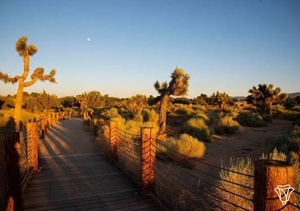
The Prime Desert Woodland Preserve Artist in Residence Program invites artists of all disciplines to spend sustained time immersed in one of the Antelope Valley’s most significant natural landscapes. Located in Lancaster, California, Prime Desert Woodland Preserve offers a rare example of high desert riparian woodland, with Joshua trees, native wildlife, seasonal wildflowers, and expansive desert landscapes.
The residency is designed to provide artists with meaningful time and space for observation, reflection, research, and creative exploration. Rather than simply producing work about the Preserve, artists are encouraged to develop a sustained relationship with the landscape and consider how the Preserve’s ecology, history, cultural context, and changing conditions may inform their artistic practice.
Over the course of the 12-week residency, artists will spend regular time at the Preserve, developing their work and documenting their observations and discoveries. The residency culminates in a public exhibition at MOAH:CEDAR, where artists share their work and research with audiences beyond the Preserve. Each artist will also create a Field Guide documenting their experience and contributing their perspective to an evolving collection of resources for future artists and the public.
Art and Place
Artists have long played a vital role in shaping how we understand and value landscapes. Through interpretation, observation, and creative inquiry, artists offer new ways of seeing that can foster stewardship, reflection, and connection.
The Prime Desert Woodland Preserve Artist in Residence Program supports artists working across all media, including but not limited to visual arts, photography, writing, sound, performance, social practice, and interdisciplinary work. Artists are encouraged to respond thoughtfully to the Preserve’s ecology, history, and sense of place while advancing their own artistic practice.
Residency Overview
The residency is a 12-week program taking place from March through May 2027. Artists are expected to maintain a regular and meaningful presence at Prime Desert Woodland Preserve throughout the residency. The residency culminates in a public exhibition shortly after the residency period. Applicants should have the capacity to develop exhibition-ready work or a clearly defined presentation during the residency.
The program provides:
- A $1,500 artist stipend to support participation in the residency, including the required community engagement activity.
- Up to six hotel stays during the residency, coordinated with the artist’s visitation schedule.
- Access to studio space at the Cedar Creative Incubator in downtown Lancaster for the duration of the residency.
- Access to Prime Desert Woodland Preserve for artistic research, observation, and exploration.
- Curatorial and logistical support from museum and program staff.
- Promotion of the artist and their work through appropriate museum channels.
- A public exhibition at MOAH:CEDAR developed collaboratively with the artist and curatorial staff.
Artist Participation and Site Access
Artists are expected to complete approximately 8–12 documented visits to Prime Desert Woodland Preserve during the 12-week residency. The number and duration of visits may vary according to the artist’s discipline and proposed approach.
Before beginning the residency, artists will provide program staff with an anticipated visitation schedule. This schedule will help museum staff coordinate Preserve access, notify rangers and other site personnel, arrange hotel stays, and address any special access or logistical needs.
Artists will maintain a simple residency log documenting their visits and general activities at the Preserve. Staff check-ins will take place during the residency to discuss progress, site access, and emerging needs.
Artists will receive an orientation to the Preserve and must comply with all applicable Preserve and City guidelines, including requirements related to safety, wildlife, protected land, access, and Leave No Trace principles.
Artist Project Boards
Two project boards are available to Artist in Residence participants at the Elyze Clifford Interpretive Center. Artists may use these boards throughout the residency as a working space to document and develop their research and observations.
Artists may post sketches, photographs, notes, questions, maps, data, references, or other materials related to their experience at the Preserve. The boards may also be used to solicit observations or information from Preserve visitors and staff.
The research boards are intended as a working space rather than a finished presentation and may provide a useful tool for developing the artist’s Field Guide and culminating project.
Public Exhibition at MOAH:CEDAR
A key benefit of the Artist in Residence Program is the opportunity to present the artist’s work and research to a broader audience through a public exhibition at MOAH: CEDAR, the Lancaster Museum of Art and History’s contemporary art and community engagement space.
The exhibition provides artists with an opportunity to extend their engagement with Prime Desert Woodland Preserve beyond the site itself and share their observations, research, and creative responses with museum audiences and the broader Antelope Valley community. The exhibition may also provide an opportunity for audiences who may not visit the Preserve to encounter the landscape through the artist’s perspective.
The artist will work collaboratively with MOAH’s curatorial team to develop the exhibition. Curatorial staff will provide guidance related to exhibition development, interpretation, installation, and presentation, while working with the artist to determine the most appropriate way to communicate the artist’s residency experience and body of work.
Artists should understand that the residency and exhibition are closely connected. The residency concludes in May 2027, with the public exhibition opening June 5, 2027. The limited time between the conclusion of the residency and the exhibition opening requires artists to develop their artwork, research, and exhibition materials throughout the residency period. Artists should not expect the period following the residency to serve as the primary production period for the exhibition.
Artists may present work created during the residency, as well as selected work from previously completed bodies of work when appropriate. Existing work may provide context for the artist’s practice or complement work developed through the residency. However, the exhibition should meaningfully reflect the artist’s engagement with Prime Desert Woodland Preserve and the residency experience.
The exhibition may include finished artwork, installation, photography, writing, sound, performance, documentation, process-based materials, community-based work, or other forms appropriate to the artist's practice.
Artists should be prepared to participate in the exhibition development process, including planning meetings, submission of exhibition materials, installation or presentation preparation, and other reasonable deadlines established by the museum.
Community Engagement
Each artist is required to propose and carry out at least one community engagement activity connected to their residency. This activity may take place at either MOAH:CEDAR or Elyze Clifford Interpretive Center during the Public Exhibition period. The activity should be accessible to a general audience and responsive to the Preserve, its visitors, and the surrounding community.
- Activities may include:
- Artist talks or presentations
- Workshops or demonstrations
- Guided walks or site-based conversations
- Participatory or socially engaged programming
Additional community engagement activities may be proposed by the artist and approved at the museum’s discretion.
Field Guide
As a final deliverable, each Artist in Residence will create a Field Guide to Prime Desert Woodland Preserve based on their experience during the residency. The Field Guide is intended to document the artist’s observations, discoveries, and personal engagement with the Preserve while creating a resource that can be shared with the public and future artists in residence.
The format and approach of the Field Guide are intentionally open-ended and may reflect the artist’s individual practice, interests, and experience. Artists may create a traditional guide, illustrated journal, map, collection of essays, photography-based publication, annotated observations, or another format that best communicates their experience.
At minimum, the Field Guide should include:
- A reflection on the residency experience, including how time spent at Prime Desert Woodland Preserve informed or influenced the artist’s work.
- Observations and discoveries made during the residency, which may relate to the Preserve’s landscape, flora, fauna, ecology, history, cultural significance, or other areas of interest.
- Points of interest that the artist believes may be meaningful or useful to visitors and/or future artists in residence.
- Documentation of the artist’s perspective, which may include sketches, photographs, written observations, maps, collected research, or other creative material.
- Information that can help future artists engage with the Preserve, informed by the artist’s own experience.
The Field Guide does not need to be comprehensive or authoritative. Rather, it should serve as a record of one artist’s experience and perspective, offering future visitors and residents an opportunity to see the Preserve through the artist’s eyes. Each guide should be distinct, reflecting the artist’s interests and creative practice.
The Field Guide is due October 1, 2027, allowing the artist time following the exhibition to reflect on the residency experience and develop the guide.
Accommodation and Working Conditions
The program provides up to eight hotel stays during the residency. Hotel stays will be coordinated with the artist’s planned visitation schedule and are subject to availability.
Artists also receive access to studio space at the Cedar Creative Incubator in downtown Lancaster for the duration of the residency. Artists will coordinate studio access with program staff. Artists must adhere to all rules and guidelines established by program staff, including studio hours and other access requirements.
Artists are responsible for their own meals, transportation, and personal art supplies unless otherwise specified. Due to the outdoor nature of the Preserve, artists should be prepared for variable weather conditions, including extreme temperatures, both heat and cold, wind, and sun exposure.
Artist Ownership and Documentation
Artists retain full ownership of all work created during the residency.
Artists will be asked to provide high-quality digital documentation of work produced during the residency for use in education, marketing, outreach, and promotion of the Artist in Residence Program, with full credit given to the artist. Detailed documentation and licensing terms will be addressed in the residency agreement.
Artists may, at their discretion, offer completed artwork for donation to the Lancaster Museum of Art and History’s permanent collection. All artwork donations are subject to museum approval and the museum’s collections management policies and priorities.
Call and Residency Timeline
| Milestone | Date |
| Call for Applications | October 19–November 20, 2026 |
| Internal Review & Selection | November–December 2026 |
| Artist Notification | Week of January 11, 2027 |
| Residency Period | March 1–May 23, 2027 |
| Public Presentation at MOAH:CEDAR | June 5–August 1, 2027 |
| Field Guide Due | October 1, 2027 |
Application Requirements
Selection Criteria
Applications will be reviewed by a selection panel composed of museum and program staff. Selection will consider:
- Artistic Merit and Quality: Demonstrated strength, creativity, and quality of the applicant’s artistic practice and submitted work.
- Connection to Place: Demonstrated interest in engaging with Prime Desert Woodland Preserve, the Antelope Valley landscape, or related environmental, cultural, historical, or community contexts.
- Residency Approach: A thoughtful proposal for how the artist intends to use the residency period, including how sustained time at the Preserve may influence their creative process, research, or final work.
- Public Engagement: Potential to engage visitors or the broader community through the artist’s practice, residency experience, culminating presentation, or proposed community engagement activity.
- Contribution to the Program: Potential to contribute meaningful observations, research, documentation, and creative perspectives through the residency and Field Guide.
Selection is based on the published eligibility and selection criteria and is made without regard to race, religion, sex, gender identity, sexual orientation, disability, marital status, or other protected characteristics.
Application Materials
Please submit the following materials through Call for Entry (CaFÉ) by November 20, 2026. Incomplete applications may not be considered.
Artists who have previously held solo exhibitions at MOAH, MOAH:CEDAR, Western Hotel Museum, or Elyze Clifford Interpretive Center within the last three years will not be considered.
1. Statement of Intent
- Description of your artistic practice
- How Prime Desert Woodland Preserve relates to your work
- What you hope to explore, research, or develop during the residency, and how sustained time at the Preserve may influence your artistic practice.
2. Proposed Community Engagement Activity
- Maximum 2000 characters
3. Artist Resume or CV
- Maximum 2 pages
4. Work Samples
- Visual artists: 5 images labeled with artist name, title, medium, dimensions, and year
- Writers: 3–5 pages of writing samples
- Time-based or performance artists: links to 5–10 minute excerpts
- Artists working in sound, social practice, film, installation, interdisciplinary, or other media may submit equivalent documentation appropriate to their discipline.
Applicants may also submit supplemental materials, such as a professional website, social media profile, video, audio, or other relevant documentation. Supplemental materials submitted as part of the application will be considered by the selection panel.
Eligibility Criteria
Who Should Apply
The program is open to emerging and established artists, age 18 and over, who reside in one of ten Southern California counties: Los Angeles, San Luis Obispo, Santa Barbara, Kern, Ventura, San Bernardino, Orange, Riverside, San Diego, and Imperial. Artists working in any creative discipline are encouraged to apply.
Applicants do not need to have previous experience working with environmental or ecological subjects. However, applicants should demonstrate a genuine interest in spending sustained time at the Preserve, observing and engaging with the landscape, and allowing the residency experience to inform their creative practice.
Artists should propose a general direction of inquiry rather than a predetermined finished project. The residency is intended to allow artists to respond to their observations and experiences as they develop over time. The residency is intended to allow artists to respond to what they encounter at the Preserve, and their direction of inquiry may evolve through observation, research, and sustained engagement with the site.