Fairs/Festivals
Local 14 Art Show & Sale 2026
Portland, Oregon
Jury Fee: $45

Contact Information
Requirement Overview
- Eligible Applicant Types: Artist
- Emerging Artists: Emerging artists may apply.
- Submission Limit: 2
Media Requirements
- Images | Min: 5, Max: 5
- Total | Max: 5
Opportunity Summary
LOCAL 14 ART SHOW & SALE
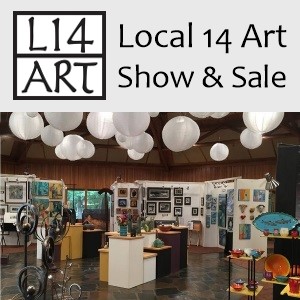
Celebrating 59 years, the Local 14 Art Show & Sale is an annual, high-quality, indoor art sale held at one of Portland's premier venues. We invite all West Coast artists (including Idaho) to apply to be part of our 60 artist event.
LOCAL 14 Art Show & Sale is:
Celebrating 59 years, the Local 14 Art Show & Sale is an annual, high-quality, indoor art sale held at one of Portland's premier venues. We invite all West Coast artists (including Idaho) to apply to be part of our 60 artist event.
LOCAL 14 Art Show & Sale is:
- A three-day sale; Friday, Saturday and Sunday, Oct. 2, Oct. 3, Oct. 4, 2026
- Held in Miller Hall at the World Forestry Center, Portland, OR
- A commission-based sale with a central cashier system handling all money transactions and wrapping of sold artwork
- Central cashier exception for jewelers who handle their own sales and wrapping
- Consists of 30 member artists who work throughout the year to produce this event, hosting 30 guests artists
- Supports emerging artists by awarding scholarships to outstanding students
- Local 14 will continue to follow the current state of Oregon and CDC COVID guidelines.
General Information
SHOW DATES & HOURS
Show Open: Friday, October 2, 2026 10 am - 6 pm
Saturday, October 3, 2026 10 am - 6 pm
Sunday, October 4, 2026 10 am - 4 pm
Set Up: Thursday, October 1, 2026 Hours TBD
VENUE Miller Hall, World Forestry Center, 4033 SW Canyon Rd, Portland, OR 97221
ELIGIBLE ARTISTS: Open to all West Coast artists from California to Alaska, including British Columbia and Idaho.
IMPORTANT DATES
January 23, 2026- Artist applications available on www.zapplication.org
March 22, 2026 - Artist applications due midnight PST
April 14, 2026 - Notification of jury results
April 29, 2026 - Accept or decline deadline
May 6, 2026 - Show fees and completed contract due
October 1, 2026 - Setup of show
October 2, 2026 - Open 10 am - 6 pm
October 3, 2026 - Open 10 am - 6 pm
October 4, 2026- Open 10 am - 4 pm
October 4, 2026 - Take down after show close must be completed by 8 pm
SHOW FEES and COMMISSIONS
$45 Jury fee: Paid by credit card through Zapplication (non-refundable)
$150 Non-refundable acceptance fee: Paid by check only, upon accepting invitation.
25% commission: On all work sold plus low group-rate credit card fees. Central cashier system with exception of jewelers who handle their own transactions. Oregon has no sales tax.
REQUIRED VOLUNTEER SHIFTS
Each guest artist, or their proxy, is required to volunteer six (6) hours during the show on tasks such as wrapping purchases, restocking displays, door security, show floor assistance, show set-up, and/or show tear down. Jewelers are required to be in their booth during show hours and handle their own transactions; therefore jewelers contribute the required hours at set up or tear down. Local 14 hosts a hospitality and rest area for all participating artists.
APPLICATION INFORMATION
All applications must be submitted through ZAPPLICATION. Slides, photos, links to websites, and/or paper applications will not be accepted.
Two (2) categories maximum. Artists wishing to exhibit work produced in two medium categories must apply separately for each medium including digital images and jury fees for each category.
For more information on how to apply digitally, please review the tips, FAQ’s, and imaging techniques found at: http://www.zapplication.org/imagingtips.phtml.
JURY REQUIREMENTS
1. Images
Four (4) images of your artwork are required plus one (1) image of your body of work as you typically display it for sale. This can be a booth/display shot, an image from a show or gallery, or a set-up of your display apparatus with your work on it. If you are planning on using your display apparatus during the show, we must see it in this image.
2. Artist Statement
An Artist Process Statement is required to be submitted with your application. Explain to the jury how you create your work and what makes it unique. We are looking for process, not philosophy. Limit your statement to 100 characters or less.
3. Jury Criteria
Within the jury process. the jury will consider original thought and intent, overall concept, demonstrated excellence in craftsmanship, and consistency of style and presentation.
WAIT LIST
Because of our need to present a balanced show we are not able to accept all of the high quality work submitted. We will maintain a waitlist of qualified applicants within all the medium categories.
ELIGIBLE MEDIUMS
All work must be original. Work may not have been exhibited previously in a LOCAL 14 show. The following categories will be considered (some mediums have specific requirements). While LOCAL 14 does not have specific numbers for each category, it is important that there is diversity in mediums both for the patrons and the selling artists.
2D CATEGORIES
Two-dimensional (2D) works are designed to be displayed on walls with a one-sided orientation. All images must be original in composition. No copies or derivative work allowed. Specific hanging details will be given to 2D artists upon acceptance. All displayed work must be for sale. Only original work may be displayed on the wall. Appropriately labeled reproductions may go into browse bins.
1. Drawing: Original compositions drawn by the artist’s hand incorporating ink, wax, crayon, charcoal, pastel, pencil, ink etc.
2. Painting: Original compositions that are created by the artist’s hand in oil, acrylic, or watercolor. Painting over prints or pre-existing images (regardless of the substrate) is not considered an original. These are considered “altered reproductions” and must go in browse bins and be labeled as outlined below.
3. Printmaking: Prints are defined as multiple originals where the artist’s hand has manipulated the plates, stone, blocks, composite reliefs, or screens and are properly signed and numbered in limited editions. Photocopies, giclees, or offset reproductions, machine-produced images are not considered print originals. They are considered reproductions and must go in browse bins and labeled as outlined below.
4. Photography: All photographic processes which begin with a camera lens. The photographic process (including any digital alteration and or hand painting, over painting etc.) must be displayed with the photograph. All pieces must be signed, numbered and dated, in a limited edition. Photographic prints must meet “archival quality” standards and must have been processed by the artist or under artist’s direct supervision by a reputable service.
5. 2D Fiber: Wall hangings and framed works of fiber art that are designed to be hung on a wall. Pieces may be woven, felted, stitched, batik dyed or created by other means appropriate to the fiber.
6. 2D Mixed Media: Work that incorporates the use of two or more media such as ink and pastel, or painting and collage-type of materials that are combined in a single original work.
REPRODUCTION POLICIES FOR ALL 2D ARTWORK
Quality reproductions are allowed in an art bin. Reproductions must be consistent with the style and quality of the juried work. A reproduction is any work that is reproduced by machine (instead of the hand of the artist). This includes glicees, photocopies, offset lithographs, prints, etc. No reproductions may be hung. 2D artists are allowed a display for greeting cards with images of their own work.
Reproductions must be labeled as such on each piece along with the kind of reproduction it is. The word “print” cannot be used unless it is a hand-pulled print. A reproduction of an original that has been altered by adding paint or other media is considered an “altered reproduction” and may not be sold as an original.
3D CATEGORIES
1. 3D Mixed Media: Three-dimensional work incorporating multiple materials. If recycled materials are used, it must be altered or used in a way that is different than their original purpose.
2. Ceramics: Original functional and/or non-functional works created by the artist from clay: porcelain, stoneware, and/or earthenware. No factory-produced work, painted slip cast or RAM pressed work allowed. Clay work from commercial molds is prohibited.
3. Glass; Work that has been handcrafted by the artist by glass blowing, fusing, casting or kiln forming. No pre-manufactured items, regardless of additional modification or enhancement by artist, are permitted.
4. Fiber – Wearables: Clothing and accessories other than jewelry. Garments, scarves, hats, purses and other items may be constructed from fiber, leather or recycled goods that are suitable for wearing. No mass- or factory-produced work is allowed regardless of additional modification or enhancement by the artist.
5. Fiber – Non-Wearables: Basketry, papermaking, leatherwork, and fibers made into non-wearable items such as rugs, towels, pillows, boxes etc. No mass- or factory-produced work is allowed regardless of additional modification or enhancement by the artist.
6. Jewelry: All jewelry must be designed and handmade by the artist using metals, gems, stones, clay, wood, fiber, glass and beads.
7. Outdoor/Garden Art: Any work, 2D or 3D, that is primarily created for outdoor display including water features, illuminations or mosaics, garden wall art, etc.
8. Sculpture: Three-dimensional works incorporating any material that is carved, modeled, constructed or cast. If recycled materials are used, they must be altered or used in a way that is different from their original purpose.
9. Wood: Functional or non-functional work crafted primarily from wood by the artist. Painted and/or wood assemblages where the artist did not make the primary piece should be entered in 3-D Mixed Media category.
Application Requirements
RULES AND GUIDELINES - PLEASE READ CAREFULLY
LOCAL 14 considers the enforcement of its rules to be our exclusive right and responsibility. Adherence to these rules during the show is necessary to maintain the quality of the show at a high level for the artists and the patrons. Non-compliance with the Rules and Guidelines can result in requests for work to be removed from display and for sale, and/or expulsion from the show and ineligibility for jurying into future shows. LOCAL 14 also reserves the right to determine how the artist work is displayed and may or may not use artist’s own display apparatus.
1. All work exhibited must be original art produced by the artist. Work done by a production studio is not acceptable. Buy-sell and/or imports are not allowed. Work from kits, commercial designs, done in classes or workshops, and derivative work are also prohibited.
2. All work exhibited must be for sale. LOCAL 14 is not a sample show. All artists who make sales within 30 days of the LOCAL 14 show as a direct result of artwork seen during the event shall pay LOCAL 14 the required 25% commission as if the work was actually sold at the show.
3. Artists may exhibit work only in the category in which they were juried. Exhibited work must be consistent in style, quality, and method with juried images.
4. No more than two (2) artists may collaborate on work. Both must sign the application.
5. Guest artists will volunteer for six (6) hours during the show. Jewelers perform their six volunteer hours during show set-up.
6. To the full extent required by the Oregon Art Consignment Act, LOCAL 14 shall use the highest care concerning consigned works of art in Local 14’s possession. The artist agrees that works of art are not in LOCAL 14’s possession during delivery to or removal from the World Forestry Center by the artist. The artist is urged to personally insure their works of art which are included in the 2025 Art Show & Sale because LOCAL 14 does not guarantee the works of art against any or all loss, destruction or damage. If LOCAL 14 is found liable for loss, destruction or damage to works of art, LOCAL 14 shall be responsible to pay the artist no more than the sales price of the work of art as listed on the inventory sheet provided by the artist at set-up, minus commission. Local 14 will not be liable for any artwork not listed on the inventory sheets.
7. Only artists accepted in the jewelry category may display and sell jewelry.
8. Reproductions: All reproductions must be clearly labeled “reproduction or giclee” on the back of the piece with a detailed description of the process. See Medium Categories for more information. Reproductions should not be labeled “prints’, unless they are hand-pulled prints. No reproductions may hang on the wall, only originals.
Jury Details
Average number of applications submitted each year
150
Average number of artists selected from the jury to participate in the event
35
Average number of exempt from jury artists who are invited to participate in the event
2
Booth Information
Though space size varies, the average size of a guest artist's display area is approximately 6' by 8'. Space for sales and wrapping is taken care of as there is a central check-out, with the exception of the jewelers. LOCAL 14 has a limited collection of props available to guest artists on a pre-arranged basis.
Refund Policy
Only if the 2026 show is cancelled by LOCAL 14 will the $150 participation fee be refunded.
Terms to Apply
Jury Fee: $45